Stefano Costa

There's more than potsherds out here

Faccio l’archeologo e vivo a Genova

  • A look at pollen data in the Old World

    Since the 19th century, the study of archaeobotanical remains has been very important for combining “strictly archaeological” knowledge with environmental data. Pollen data enable assessing the introduction of certain domesticated species of plants, or the presence of other species that grow typically where humans dwell. Not all pollen data come from archaeological fieldwork, but the relationship among the two sets is strong enough to take an interested look at pollen data worldwide, their availability and most importantly their openness, for which we follow the Open Knowledge Definition.

    The starting point for finding pollen data is the NOAA website.

    The Global Pollen Database hosted by the NOAA is a good starting point, but apparently its coverage is quite limited outside the US. Furthermore, data from 2005 onwards aren’t available via FTP in simple documented formats, but are instead downloadable as Access databases from another external website. Defining MS Access databases as a Bad Choice™ for data exchange is perhaps an euphemism.

    Unfortunately, a large number of databases covering single continents or smaller regions is growing, and the approaches to data dissemination show marked differences.

    Americas

    For both North and South America, you can get data from more than one thousand sites directly via FTP. There are no explicit terms of use. Usually, data retrieved from federal agencies are public domain data.

    The README document only states NOTE: PLEASE CITE ORIGINAL REFERENCES WHEN USING THIS DATA!!!!!. Fair enough, the requirement for attribution is certainly compatible with the Open Knowledge Definition.

    Europe

    From the GPD website we can easily reach the European Pollen Database, that is found at another website tough (and things can be even more confusing, provided that the NOAA website has some dead links).

    You can download EPD data in PostgreSQL dump format (one file for each table, with a separate SQL script create_epd_db.sql). Data in the EPD can be restricted or unrestricted. That’s fine, let’s see how many unrestricted datasets there are. Following the database documentation, the P_ENTITY table contains the use status of each dataset:

    steko@gibreel:~/epd-postgres-distribution-20100531$ cat p_entity.dump \
     | awk -F "t" {' print $5 '} | sort | uniq -c 
     154 R 
     1092 U

    which is pretty good because almost 88% of them are unrestricted (NB I write most of my programs in Python but I love one liners that involve awksort and uniq). We could easily create an “unrestricted” subset and make it available for easy download to all those who don’t want to mess up with restricted data.

    But what do “unrestricted” mean for EPD data? Let’s take a more careful look (emphasis mine):

    1. Data will be classified as restricted or unrestricted. All data will be available in the EPD, although restricted data can be used only as provided below.
    2. Unrestricted data are available for all uses, and are included in the EPD on various electronic sites.
    3. Restricted data may be used only by permission of the data originator. Appropriate and ethical use of restricted data is the responsibility of the data user.
    4. Restrictions on data will expire three years after they are submitted to the EPD. Just prior to the time of expiration, the data originator will be contacted by the EPD database manager with a reminder of the pending change. The originator may extend restricted status for further periods of three years by so informing the EPD each time a three-year period expires.

    Sounds quite good, doesn’t it? “for all uses” is reassuring and the short time limit is a good trade off. The horror comes a few paragraphs below with the following scary details:

    1. The data are available only to non-profit-making organizations and for research.

    Profit-making organizations may use the data, even for legitimate uses, only with the written consent of the EPD Board, who will determine or negotiate the payment of any fee required.

    Here the false assumption that only academia is entitled to perform research is taken for granted. And there are even more rules about the “normal ethics”: basically if you use EPD data in a publication the original data author should be listed among the authors of the work. I always thought citation and attribution were invented just for that exact purpose, but it looks like they have distinctly different approach to attribution. The EPD is even deciding what are “legitimate” uses of pollen data (I can hardly think of any possible unlegitimate use).

    Africa

    You write “Africa” but you read “Europe” again, because most research projects are from French and English universities. For this reason, the situation is almost the same. What is even worst is that in developing countries there are far less people or organizations that can afford buying those data, notwithstanding the fact that in regions under rapid development the study and preservation of environmental resources are of major importance.

    Data are downloadable for individual sites using a search engine, in Tilia format (not ASCII unfortunately). The problems come out with the license:

    The wording is almost exactly the same as for the EPD seen above:

    Normal ethics pertaining to co-authorship of publications applies. The contributor should be invited to be a co-author if a user makes significant use of a single contributor’s site, or if a single contributor’s data comprise a substantial portion of a larger data set analysed, or if a contributor makes a significant contribution to the analysis of the data or to the interpretation of the results. The data will be available only to non-profit-making organisations and for research. Profit-making organisations may use the data for legitimate purposes, only with the written consent of the majority of the members of the Advisory board, who will determine or negotiate the payment of any fee required. Such payment will be credited to the APD.

    Conclusions

    As for dendrochronological data, there is a serious misunderstanding by universities and research centers of their role in society as places of research, innovation that is available for everyone. In other words, academia is a closed system producing data (at very high costs for society) that are only available inside its walls, but it’s all done with public money.

    The only positive bit of the story, if any, is that these datasets are nevertheless available on the web, and their terms of use are clearly stated, no matter how restrictive. It would be just impossible to write a similar article about archaeological pottery, or zooarchaeological finds.

    Appendix: Using pollen data

    Pollen data are usually presented in forms of synthetic charts where both stratigraphic data and quantitative pollen data are easily readable. Each “column” of the chart stands for a species or genus. You can create this kind of visualization with free software tools.

    The stratigraph package for R can be used for

    plotting and analyzing paleontological and geological data distributed through through time in stratigraphic cores or sections. Includes some miscellaneous functions for handling other kinds of palaeontological and paleoecological data.

    See the chart for an example of how they look like.

    An example plot using the R stratigraph package
    An example plot using the R stratigraph package
  • Developing a vocal language. Standing three miles apart.

    Tonight I was walking along a country road near my house, almost in the
    dark. Despite the highway that runs at less than 500 meters from there,
    there was an unusual moment of silence (probably everyone else in Italy
    was staring at the TV), and I suddenly realized that with that silence
    it would be possible for me to hear someone crying out loud from the
    Torre del Mangia — literally three miles away from there. Or viceversa,
    if you like.

    It’s not that different from how the muezzin is spreading his voice
    and prayers. In a pre-industrial society, there is generally speaking
    much more silence than now. As a consequence, you can hear voices and
    sounds from far distances.

    Now translate this concept in … 40,000 BP and imagine how you would
    use your voice to communicate with someone else. The usual theory about
    the development of human language deals with social practices like
    sitting around the fire, etc. that happen while being in the same place.
    That is fine, but to me it doesn’t explain everything: the same people
    had to communicate also during the day, and if they were developing a
    language that would fit their needs, we may suppose they used it during
    hunting and catching as well. My idea is that in this way the language
    that comes out is restricted by the use they made of it: if it was for
    communicating from three miles away, it had to be made of distinct and
    recognizable sounds. Thus, in a sense, a simpler language than what can
    be used when sitting around the fire.

    Following this line of reasoning, only with new habits and the
    abandonment of nomadic life a more complex language would have been
    developed. And, of course, this might as well imply that shepherds would
    have continued to use such a language, or at least such

    I’m perfectly aware that what I have written hasn’t a single link to
    reality (and I don’t know anything about language), but it was certainly
    more interesting than watching soccer and I had a nice walk in the dark.

  • The flow of data

    How is that citizens have no access to entire datasets that are used
    every day by thousands of people? Here is a draft of a possible
    explanation, simplistic but not without sense.

    flowofdata-scaled1000
  • A bike ride in val d’Arbia

    Today I went for my ritual Sunday bike ride in the countryside.

    I headed southwards along the Cassia road, just until Colle Malamerenda.
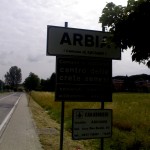
    Then straight on unpaved roads (even non-existing tracks in the fields), through Borgo Vecchio, Salteano and Taverne d’Arbia.

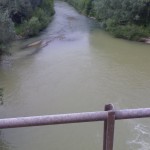
    From Taverne I followed the river downstream, crossed it at a beautiful ford that took me again on the paved road nearby Renaccio. Strada di Certosa is very steep at the beginning, but then it becomes more gentle.

    I even took some pictures with my mobile phone. My GPS instead worked so bad that the GPX tracks are unrecognizable, maybe I put it in a bad place to receive its signal.

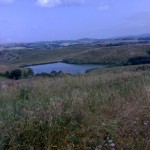
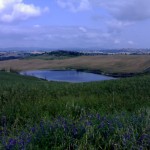
  • Water basins are traces of extracting clay

    Here around Siena there are lots of small water basins, measuring 10
    meters in diameter on average. They tend to be near country houses, not
    far from secondary roads.

    They are used for water storage, but it’s not their original end.
    Instead, they are what was left by small activities for the extraction
    of clay – Siena is renowned for its “crete”.

    The country house where I live is in a place once called “la Fornace”,
    so it’s very likely that the basins around it were the last places where
    clay was extracted before the kiln ceased to work.

  • ArcheoFOSS 2010: back from Foggia

    ArcheoFOSS 2010, the 5th Italian workshop on “Free software, open source e open format nei processi di ricerca archeologica” took place in Foggia, on the 6 and 7 May. First of all, it was very good. I’m satisfied with this meeting. Why? Here are some thoughts I sketched while traveling back to Siena.

    Lots of talks were about the results and methods of research done by MA and PhD students (myself included) – and this means one of the most important pieces of research, perhaps the most important at all, and the most underrated at the same time. Our community shows a strong connection between education and research. Making this connection stronger is part of our habits, I believe

    There was a lot of discussion about methodology, and thanks to the firm experience of our friends in Foggia we have gone beyond some stereotypes of the past years. Take for example the recognition that methodology means much more than recording, documentation or technical tools. Add the acceptance of plurality as a (positive) fact rather than a problem. End up with the epiphany that using similar tools (e.g. databases, GIS) doesn’t mean working with the same underlying methodological mindset. In Italy we have a very bad habit of not having a debate about method and theory, but with this workshop we’re clearly building a place open for discussion.

    We are well distributed geographically (from many regions of Italy) and chronological/disciplinary (from prehistoric to medieval archaeology, both excavation and landscape archaeologists). Despite this variability, there are some strong groups that are references for the whole community. I firmly believe that the University of Foggia should be listed among these groups since now. Even more interestingly, there are new groups of people that look very promising for their novel approach (I am glad to see that even my department could now be listed here). The ArcheoFOSS workshop is already acting as an incubator for innovation, and in the future we will see more of that, because of the large number of young researchers involved, the friendly and encouraging environment that is perhaps even more interesting than “open archaeology” for Italian academia. Or maybe it’s just part of the “open archaeology” agenda.

    Free software works. It works from a technical perspective, obviously, but also from a social one. We have been learning its limits, its potential and the ways to improve it and share it. There’s a political vein in free software, and it’s so well combined with the need for a new way of doing research in archaeology. On the technical side, I am more and more excited about how creativity is encouraged, instead of being pre-ordered. We are doing humanities – it would be so silly to lose our creativity (also when it goes towards chaos and anarchy), in the name of a pseudo-scientific strictness born out of a great misunderstanding. We already won one bet since the early 2000, but now we can play with something even more important: not just sharing software and methods, but sharing knowledge. This is our target for 2020, and what we are going to do for the next decade.

    Lastly, we’re learning how to act in the real world, and not just discuss among ourselves. Take for example the creation of common tools for creating catalogues. we can do that from the bottom up, with a wide perspective that is going to comprise technical standard, conservation and research needs – all as free software and open formats. grupporicerche already proposed some work in this direction last year, and we invite again all those who have developed databases for archaeological purposes to share them.

    What’s missing? Of course, we have lots of areas for improvement. This is also because of the “multidimensional” approach of this initiative. Here I list some topics that I’m particularly interested in:

    • quantitative and statistical methods: let’s take back maths into archaeology through computing! This is not to say that archaeology can be reduced in numerical terms, but on the contrary to better define the complexity we are dealing with, giving the right weight to “data” (whatever that means) and developing proper archaeological ideas
    • an inter-regional and international approach, to deal with big not-so-big research themes in a collaborative way
    • encouraging the upgrade of old databases from obsolete, proprietary formats to open and free formats, ready for dissemination on the web
    • build a technological infrastructure for sharing our work, in the many forms it can take – or at least develop best practices for doing that on our own, taking accessibility and sustainability into account since day #0

    More comments, insights and excerpts from the round table to follow in the next few days.

    This post was originally published at iosa.it.

  • Ενα ταξίδι στο Σουνιον

    Στις 28 Απριλίου 2010 πήγαμε στο Σουνιον. O νάος είναι πολύ ωραίος. Ό ουρανός ήταν απίστευτα φανής. Έβγαλα μερικές φωτογραφίες.

  • Democrazia?

    Silvia Ronchey una volta a lezione ci raccontò la sua scelta nel ’68: lei scelse di studiare. Indipendentemente da quello che lei scelse veramente e dalle sue ragioni, è stato meglio così. Il ’68 non ha rovesciato un regime, lo ha solo sostituito – operando a livello culturale quello che a livello politico è avvenuto con l’introduzione della democrazia.

    La nostra democrazia, così come è scritta nella Costituzione, come ci viene (veniva?) insegnata a scuola, non esiste. Non esiste nella realtà, anzi. Si tratta di una fantastica forma di autorappresentazione della nostra società. Mi limito a parlare dell’Italia, pur con il sospetto che lo stesso sia vero anche altrove, e con la ragionata certezza di quanto questo sia vero per le varie “culle della democrazia” a partire dall’Atene del V secolo. L’autorappresentazione collettiva, i gruppi di potere (in misura variabile coscienti della sceneggiatura che governa il loro stesso agire) e la forma dello Stato hanno a che fare molto da vicino con la violenza, il suo monopolio, la tutela sacrale del potere in quanto potere in quanto forza razionale (oltre ogni altra ragione) di ordine sociale, di controllo (non necessariamente in senso negativo).

    Il decreto salva-elezioni è una meravigliosa porta su questo mondo. Si sacrificano le regole formali in nome della necessità di “rappresentanza degli schieramenti”: la gente deve poter scegliere chi votare, altrimenti l’elezione è una farsa. Ma nessuno si lamenta invece dell’abolizione delle preferenze (“la gente deve poter scegliere chi votare”), perché evidentemente non si vota una persona, si vota invece uno schieramento, e si vota a priori, magari con l’impressione del “meno peggio”, “turandosi il naso”. Quindi, non democrazia, ma partitocrazia. I partiti sono indispensabili per lo svolgimento effettivo della vita politica, si dirà. Lo sono, perché condensano la necessità antropologica di identificazione del non-più-cittadino che vota il partito con la stessa parte del cervello che usa per tifare una squadra di calcio. Non lo sono certamente per lo svolgimento effettivo della democrazia, e solo un po’ per la sua rappresentazione teatrale.

    Dietro questo decreto legge c’è un aspetto di brutale disumanità, di violenza annusata e ricacciata al buio. Condonare il mancato rispetto delle regole per evitare la carneficina, la protesta a mano armata. Era scontato dal momento stesso in cui è accaduto che tutte le liste escluse venissero riammesse. Non lo era invece la barbarie che ha reso necessario il metodo usato – in fondo il TAR poteva tranquillamente ammettere le liste senza una legge, la giustizia amministrativa non deve rendere conto a nessuno in Italia. Barbarie, violenza … ma che sto dicendo? Un passo indietro.

    Il ritardo nella consegna delle liste, panini a parte, è ovviamente dovuto a lotte senza quartiere per l’inclusione in liste, listini e listelli che in ogni partito degno di questo nome si protraggono per mesi tra ricatti, svendite, accordi, prostituzione e minchiate. Succede a tutte le elezioni, questa non è speciale. Ogni nome aggiunto al listino, spostato in graduatoria, rimosso con sotterfugi, è il segnaposto di un piccolo o grande potentato. I poteri, tanti, tantissimi che in qualunque modo devono trovare la loro strada verso l’alto, sono impossibili da fermare e nulla può esser loro negato: chi si fa avanti pagando in contanti, chi in troie (evviva l’ottomarzo), chi in ricatti, chi in violenze, intimidazioni, voti, appalti, assunzioni, favori, amici, degli amici. Sono loro i barbari. Loro che non possono essere fermati da una banale regola burocratica, a cui non si può dire di no se non puntando una pistola alla tempia e l’altra alla minchia. Che però noi non possiamo farlo, forse nemmeno vogliamo, almeno per ora. Sono quei barbari che devono essere costantemente essere placati, e ogni tanto se ne colpisce uno per farne passare altri ventimilioni. Apparentemente è impossibile fermarne la corsa, e anche chi li cavalca prima o poi sarà disarcionato, comprato e venduto.

    Potrei portare avanti la metafora barbarica, senza motivo né risultato: non siamo nel 410. E questi sono stronzi davvero, non solo morti di fame.

  • Libri letti nell’anno duemilanove

    Dicembre

    Nicolò Ammaniti, Che la festa cominci
    Letto in fretta, rubandolo a Elisa. Scoppiettante. Belli i satanisti.

    Novembre

    A. A. Milne, Winnie Puh e La strada di Puh
    Sono bellissimi. Le storie e i disegni — sono veramente come quelle che raccontavo a mio fratello da piccoli. Dimentichiamo volentieri il prodotto Disney, pallida rivisitazione dell’originale.
    Fred Vargas, Un lieu incertain
    Dannatamente delirante anche rispetto a Nei boschi eterni tra colpi di scena e intrichi di menzogne. L’assassino ha un dettaglio di troppo in comune con quello del precedente…
    Fred Vargas, Io sono il tenebroso
    Pur con tutta la mia buona volontà, all’ultimo credevo che fosse veramente C. l’assassino.

    Ottobre

    Fred Vargas, Parti in fretta e non tornare
    Li sto leggendo tutti in disordine, accidenti alle traduzioni italiane. Ma è difficile staccarsi dal libro. Anche se queste storie che affondano le loro radici nel passato si assomigliano un po’ tutte ormai, e la tecnica narrativa mi è piuttosto chiara.
    Fred Vargas, Chi è morto alzi la mano (Debut les morts)
    Il primo libro degli “evangelisti”. Meglio di Un po’ più in là sulla destra secondo me. Ovviamente ho iniziato la mattina e ho dovuto finirlo prima di sera.

    Settembre

    Marco Aime, Il primo libro di antropologia
    Sì, è un manuale. E ho imparato decine di cose interessanti da e su una disciplina che vorrei cercare di sentire affine all’archeologia che faccio.

    Agosto

    Noam Chomsky, Anarchismo. Contro i modelli culturali imposti (titolo orig. Chomsky on anarchism)
    Lo avevo comprato a maggio insieme a Bourdieu. Estremamente stimolante, anche se non riesce sempre a essere convincente, in particolare per il fatto che mette sempre al centro della sua società anarchica il lavoro e la produzione, mentre sono piuttosto convinto che la loro centralità sia un frutto della mentalità capitalista (ho una certa tendenza al primitivismo). Notevoli i collegamenti con Orwell e gli accenni al sostegno statunitense allo scià di Persia (v. la lettura precedente).
    Ryszard Kapuściński, Shah-in-Shah
    QED. E molte cose dell’Iran di oggi mi sembrano meno lontane e ignote. E cita Elias Canetti. C’è sempre un filo invisibile che lega tutto quello che leggo.
    Stieg Larsson, Uomini che odiano le donne
    Ha dovuto aspettare qualche mese visto che me lo aveva regalato Giulia per la laurea…

    Luglio

    George Psychoundakis, The Cretan Runner (tradotto e commentato da Patrick Leigh Fermor)
    Dopo aver letto The Fortress Crete mi era venuta voglia di approfondire l’argomento, e questo libro è fantastico. Per di più ci ha fatto da guida estemporanea durante il viaggio a Creta.

    Giugno

    Ryszard Kapuściński, Ebano
    Ancora lui (e non mi sembra di aver letto In viaggio con Erodoto quasi un anno fa). Penso che leggerò anche altri suoi libri.
    Elias Canetti, Potere e sopravvivenza (raccolta di saggi)
    Me lo ha passato Elisa dopo che ho provato a spiegarle Bourdieu. Alcuni saggi sono di una lucidità tagliente, come Potere e sopravvivenza e quello su Hitler.

    Maggio

    Pierre Bourdieu, Ragioni pratiche
    L’ho visto in libreria, ne parla Hodder. Ma se va bene un archeologo conosce Durkheim, e continuiamo a rifarci a modelli vecchi di 50 anni e più per tutto quello che non è strettamente archeologia. Leggere Bourdieu in questo momento non è stato un caso, né sarà senza conseguenze per come affronterò la storia socio-economica in futuro.
    Ian Hodder, Leggere il passato
    A tratti delirante, a tratti interessante, è comunque qualcosa che ogni archeologo dovrebbe leggere ed essere costretto a rielaborare. Di Elisa.
    Peter Brown, Il mondo tardoantico
    Sì, mi sono laureato in archeologia tardoantica senza averlo letto, ma non mi sembra poi così grave. Di Elisa.
    Colin Renfrew, Archeologia e linguaggio
    Lo citava a più riprese Diamond. Preso in prestito all’ISCUM.
    Fred Vargas, Un po’ più in là sulla destra
    Ormai li devo leggere tutti. Di Elisa.
    Roy Lewis, Il più grande uomo scimmia del Pleistocene
    Dopo anni che Giulia me ne parlava, finalmente l’ho letto. Semplicemente fantastico.

    Gennaio

    • Iosif Brodskij, Fuga da Bisanzio (trad. di Less than one. Selected essays)
  • bye bye last.fm

    Oggi ho cancellato il mio account last.fm, dopo avere recuperato i dati di ascolto. Da oggi ho un account su libre.fm: http://alpha.libre.fm/user/steko/. È certamente meno elaborato ma non ho mai comunque usato le funzionalità di community di last.fm.